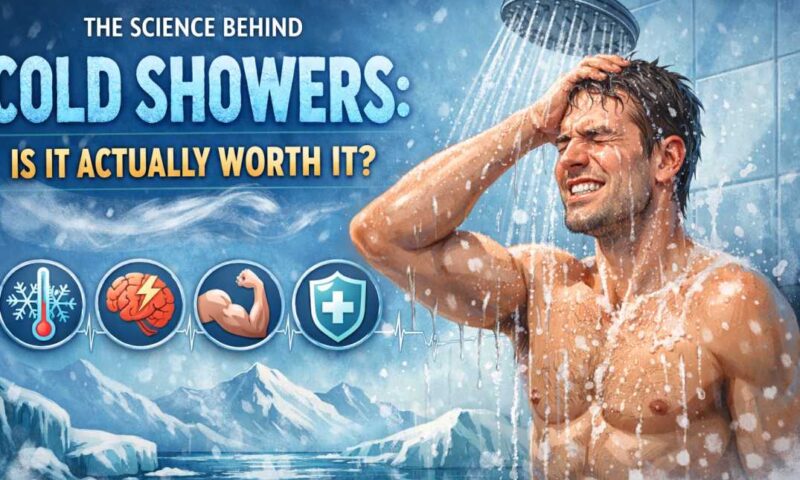
Cold showers are one of those wellness habits that occupy a strange position in the cultural conversation. On one side: wellness influencers, biohackers, and high-performance athletes who swear by them as a near-miraculous intervention for mood, energy, and resilience. On the other: a reasonable scepticism about whether voluntarily suffering cold water every morning is genuinely productive or just uncomfortable for its own sake.
The cold shower benefits science has actually investigated are more nuanced than either camp suggests. Some of the claimed benefits are well-supported by peer-reviewed research. Others are overstated. A few are actively counterproductive in specific contexts. This article separates what the evidence actually shows from what has been extrapolated, exaggerated, or invented in the wellness content machine.
By the end, you will have a clear, honest answer to the question of whether cold showers are worth it — based on what the research says, who they benefit most, and exactly when to take them (and when not to).
Cold Shower Benefits: The Evidence Rated
Here is every major claimed benefit of cold showers, what the research actually found, how strong that evidence is, and whether the benefit is genuinely worth pursuing:
| Cold Shower Benefit | What Science Found | Evidence Strength | Key Institution / Study | Worth It? |
| Mood boost / reduced depression symptoms | Subjects reported significantly reduced symptoms of depression after 4–5°C showers | Moderate — needs larger trials | Virginia Commonwealth University | ✅ Yes |
| Dopamine increase | Cold exposure triggers sustained norepinephrine and dopamine surges of up to 300% | Strong — multiple replications | Dr Andrew Huberman / Neuroscience lit. | ✅ Yes |
| Faster muscle recovery | Cold water immersion reduces DOMS and perceived soreness post-exercise | Strong — widely replicated | Multiple sports science RCTs | ✅ Yes (post-exercise) |
| Metabolism boost | Activates brown adipose tissue (BAT), which burns calories to generate heat | Moderate — effect size varies | NEJM & multiple BAT studies | ⚠️ Modest — not a weight loss tool |
| Improved immune function | Wim Hof study: cold+breathing group had 50% fewer sick days vs control | Moderate — small sample | Radboud University, Netherlands | ✅ Promising |
| Increased alertness/focus | Cold shock triggers norepinephrine release — a natural stimulant, without caffeine | Strong — physiological mechanism | Well-established stress physiology | ✅ Yes — immediate effect |
| Improved skin and hair | Cold water tightens pores and cuticles; reduces oiliness vs hot showers | Weak — mostly observational | Dermatological observations | ⚠️ Mild benefit |
| Resilience/stress tolerance | Regular cold exposure habituates the stress response — lowers chronic baseline cortisol | Moderate — behavioural studies | University College London cohort data | ✅ Yes — over time |
| Reduced muscle protein synthesis | Immediate post-strength-training cold exposure can blunt hypertrophy signalling | Strong — RCT data | Journal of Physiology 2015 | ⚠️ Avoid post-strength training |
The most important takeaway from this evidence overview is that context matters enormously. Cold shower benefits science supports several real benefits — but those benefits are highly dependent on timing, purpose, and individual physiology. Cold after strength training, for instance, is one of the cases where the evidence specifically argues against it.
What Actually Happens to Your Body in a Cold Shower
Understanding the cold shower benefits science requires understanding the physiological cascade that cold exposure triggers — because most of the benefits flow from the same initial stress response.
When cold water hits your skin, your body initiates what physiologists call the “cold shock response.” Skin cold receptors fire rapidly, the heart rate spikes by 10 to 30 beats per minute within the first 30 seconds, breathing rate increases sharply with an involuntary gasp, and blood vessels in the extremities constrict (vasoconstriction) to protect core temperature. Simultaneously, the adrenal glands release norepinephrine, a neurotransmitter and hormone that functions as a natural stimulant.
This initial shock phase, which lasts roughly 30 to 90 seconds, is the most physiologically significant part of a cold shower. Research from Dr. Susanna Søberg and colleagues, as well as from Dr. Andrew Huberman’s Stanford lab, has shown that sustained cold exposure beyond this initial response triggers a secondary cascade: sustained elevation of norepinephrine (which peaks at 200–300% above baseline), activation of brown adipose tissue (thermogenic fat that burns calories to generate heat), and over time, adaptation of the hypothalamic-pituitary-adrenal (HPA) axis — the brain’s stress regulation system.
It is this sustained, repeatable stress response that underlies most of the legitimate cold shower benefits science has identified. Each of the seven benefits below traces back to some component of this cascade.
7 Cold Shower Benefits Science Actually Supports
1. Immediate Mood Boost and Reduced Depression Symptoms
One of the most clinically interesting areas of cold shower benefits science is the research on depression. A 2008 study by Dr. Nikolai Shevchuk at Virginia Commonwealth University proposed cold showers as a potential complementary treatment for depression, based on the observation that cold exposure triggers massive norepinephrine release in the brain — the same neurotransmitter that many antidepressant medications work to increase.
A more recent study published in PLOS ONE found that participants who followed a cold shower protocol reported a significant reduction in depression and anxiety symptoms compared to a control group. The mechanism is well-understood: norepinephrine functions as a mood regulator, and the cold-triggered surge produces effects that are neurochemically similar to moderate exercise. This does not mean cold showers replace antidepressant treatment — the research is detailed on that — but the mood lift reported by regular cold shower practitioners has a genuine neurochemical basis.
- The mechanism: Cold shock triggers norepinephrine release — a natural mood regulator and antidepressant neurotransmitter
- Key finding: PLOS ONE participants reported measurably reduced depression symptoms following a cold shower protocol
- Important caveat: This is complementary evidence, not a clinical treatment — consult a professional for depression management
The science: Cold exposure can trigger norepinephrine surges of up to 300% above baseline — with real, measurable mood effects.
2. Sustained Dopamine and Norepinephrine Elevation
The distinction between cold showers and other stimulants — coffee, for example — is the duration and mechanism of the neurochemical effect. Caffeine blocks adenosine receptors to produce alertness; the effect is relatively short and followed by a comedown. Cold exposure, by contrast, triggers the direct release of norepinephrine and dopamine from the body’s own systems — and research from multiple institutions has found that the elevation in these neurochemicals following cold exposure is more sustained than most other acute stimuli.
Dr Andrew Huberman’s widely discussed neuroscience research cites studies showing that dopamine levels can remain elevated for two to four hours following significant cold exposure — creating a prolonged state of motivation, alertness, and positive affect without the crash associated with external stimulants. This is one of the most practically significant cold shower benefits for productivity and daily performance, and one of the most robustly supported by the underlying physiology.
- Dopamine elevation: Studies show sustained dopamine and norepinephrine rise lasting 2–4 hours post cold exposure
- Compared to caffeine, the cold-triggered neurochemical response is more sustained with no adenosine-based crash
- Best practice: Morning cold showers leverage this effect at the most useful time of day for focus and performance
The science: Cold exposure produces dopamine elevations of up to 250% in some studies — with effects lasting hours, not minutes.
3. Accelerated Athletic Recovery — With One Critical Exception
Cold water immersion for muscle recovery after exercise has one of the most robust evidence bases in sports science. Multiple randomised controlled trials have found that cold water immersion (CWI) following endurance or team sport exercise significantly reduces delayed onset muscle soreness (DOMS), perceived fatigue, and inflammatory markers compared to passive recovery. This is why ice baths and cold immersion pools have been standard equipment in professional sports facilities for decades.
However, one of the most important nuances in cold shower benefits science is the finding — published in the Journal of Physiology — that cold water immersion immediately after resistance training can blunt the signalling pathways that drive muscle protein synthesis and hypertrophy. If your primary training goal is building muscle size and strength, a cold shower directly after your weight session may be actively counterproductive. The practical rule: cold after endurance work, cardio, or team sports, yes; cold after strength training, no, or wait at least two hours.
- Best for: Post-endurance exercise, post-HIIT, post-team sports — reduces soreness and speeds recovery
- Avoid: Immediately after strength training if hypertrophy is your goal — blunts muscle protein synthesis
- Optimal timing: 10–20 minutes of cold exposure post-endurance exercise is the most studied protocol
Verdict: Cold showers post-exercise: strongly supported for endurance. Counterproductive immediately post-strength training.
4. Brown Fat Activation and Metabolic Boost
Brown adipose tissue (BAT) — sometimes called brown fat — is a metabolically active type of fat that generates heat by burning energy. Unlike white fat, which stores calories, brown fat burns them. Cold exposure is one of the primary triggers for brown fat activation in adult humans. Research published in the New England Journal of Medicine confirmed that most adults have functional brown fat deposits and that cold exposure reliably activates this tissue.
The metabolic implications are real but modest. Cold shower benefits science in this area confirms a genuine calorie-burning effect — one study found that brown fat activation through cold exposure could account for 200 to 400 additional calories burned per day in subjects with high brown fat activity. However, this effect is highly variable between individuals, and brown fat activation should not be positioned as a significant weight-loss tool. It is a genuine metabolic benefit, but a minor one in the context of overall energy balance.
- The mechanism: Cold activates brown adipose tissue, which burns glucose and lipids to generate heat
- Calorie impact: Potentially 200–400 additional kcal/day in high responders — significant individual variation
- Realistic positioning: A genuine but modest metabolic benefit — not a weight loss solution in isolation
The science: NEJM-published research confirmed that cold exposure activates brown fat in most adults, producing measurable but modest metabolic effects.
5. Immune System Support
The immune system research on cold exposure is among the most cited in cold shower benefits science, and one of the most methodologically interesting. A landmark study from Radboud University in the Netherlands, involving practitioner Wim Hof and a controlled experimental design, found that participants trained in Wim Hof’s method (combining cold exposure with specific breathing techniques) produced significantly fewer pro-inflammatory cytokines when injected with bacterial endotoxin, and reported 50% fewer sick days compared to the control group.
This study was widely reported as evidence that cold exposure boosts immunity. The honest interpretation is more nuanced: the cold component of the Wim Hof method was combined with specific breathing techniques, making it difficult to isolate cold exposure’s independent contribution. Subsequent research has found that regular cold exposure does appear to increase circulating leukocyte and monocyte counts — white blood cells associated with immune response — but the effect size and clinical significance remain under investigation. The evidence is promising but not definitive.
- Radboud University finding: Wim Hof method group had 50% fewer sick days than the control — cold + breathing combined protocol
- Isolated cold exposure: Increases certain white blood cell counts — evidence promising but not yet definitive
- Practical takeaway: Regular cold exposure likely provides modest immune support — not a replacement for other health fundamentals
The science: Cold + breathing training produced a 50% reduction in sick days at Radboud University — but isolating cold’s specific contribution remains difficult.
6. Stress Resilience Through HPA Axis Adaptation
One of the less discussed but most compelling areas of cold shower benefits science concerns long-term adaptation of the body’s stress response system. The hypothalamic-pituitary-adrenal (HPA) axis — the brain-body system that governs how we respond to stressors — is trainable through repeated exposure to manageable stressors. Cold exposure is one of the most reliable triggers for this training.
Research in hormesis — the principle that mild, controlled stressors produce adaptive improvements in stress tolerance — supports the idea that regular cold exposure gradually lowers the baseline cortisol response to everyday stressors. In practical terms: people who regularly take cold showers report becoming more psychologically composed in stressful situations over time. The act of choosing to experience discomfort, repeatedly, also builds a transferable skill — the ability to override the brain’s avoidance signal — that applies beyond the shower.
- The hormesis principle: Mild, repeated stress produces adaptation — the body becomes better at handling both the specific stressor and generalised stress
- HPA axis training: Regular cold exposure habituates the adrenal stress response, reducing baseline cortisol over time
- Psychological transfer: The discipline of choosing discomfort daily builds a real cognitive habit of stress tolerance
Verdict: Over 4–8 weeks of consistent cold exposure, a measurable reduction in stress reactivity is well-supported by both physiology and behavioural data.
7. Sharper Morning Alertness Without Caffeine Dependence
The immediate alertness produced by a cold shower is not just anecdotal — it has a clear neurochemical mechanism. The norepinephrine surge triggered by cold shock activates the same pathways as stimulant medication, producing sharp increases in focus, arousal, and sensory alertness within seconds. For many people, a one-to-two-minute cold shower in the morning produces a level of immediate cognitive activation that coffee alone does not replicate.
The practical advantage over caffeine is independence from tolerance. Regular caffeine use produces adenosine receptor upregulation — you need more over time to get the same effect. Cold showers do not produce the same tolerance mechanism. The norepinephrine response to cold exposure remains relatively consistent over time, making it a reliable alertness tool that complements rather than competes with caffeine. Many high-performers who prioritise cold shower benefits science use cold showers as a caffeine-free alertness mechanism for days when they need to reduce caffeine intake.
- Mechanism: Norepinephrine surge from cold shock activates the same focus and arousal pathways as stimulant medication
- Tolerance: Unlike caffeine, cold shower alertness effects do not diminish significantly with regular use
- Best practice: One to two minutes of cold water in the final portion of a warm shower produces the alertness effect for most people
The science: Cold shock triggers norepinephrine release in seconds — producing measurable increases in heart rate, alertness, and sensory arousal that outlast the shower itself.
Cold vs Hot Showers: Side-by-Side Science Comparison
Not all shower temperatures are equal. Here is exactly how cold and hot showers compare across every major health and wellness dimension:
| Factor | Cold Shower | Hot Shower | Winner |
| Mood / mental alertness | Strong boost via norepinephrine/dopamine surge | Mild relaxation, no alertness boost | ❄️ Cold |
| Muscle recovery (post-gym) | Reduces DOMS, perceived soreness, and inflammation | Relaxes tight muscles, improves blood flow | ❄️ Cold (soreness) / 🔥 Hot (stiffness) |
| Sleep quality | Better taken in the morning — too alerting before bed | A warm shower 1 hour before bed improves sleep | 🔥 Hot (for sleep) |
| Skin and hair | Tightens pores, reduces oil production | Opens pores, strips natural oils | ❄️ Cold (mild edge) |
| Immune function | Some evidence for improved resilience | No specific immune benefit documented | ❄️ Cold (modest edge) |
| Stress relief | Habituates the HPA stress axis over time | Immediate parasympathetic activation | 🤝 Depends on goal |
| Metabolism | Activates brown fat — modest calorie burn | No metabolic activation | ❄️ Cold (minor benefit) |
| Willpower/discipline | Strong — requires active override of discomfort | No willpower training effect | ❄️ Cold |
| Comfort/enjoyment | Low — most people never fully enjoy it | High — universally preferred | 🔥 Hot (obviously) |
The evidence-based conclusion: cold showers are superior for morning alertness, mood, athletic recovery, and stress resilience. Hot showers win for pre-sleep relaxation, immediate comfort, and muscle tension relief. A contrast shower — ending warm, finishing with 30 to 60 seconds of cold — is the approach many practitioners and researchers recommend as a practical middle ground.
How to Start Cold Showers (Without Dreading Every Morning)
The most common reason people try to abandon cold showers is starting with full cold immediately. This is not how the body adapts to cold exposure, and it is not the approach that cold shower benefits science supports.
- Week 1: Finish your normal warm shower with 15–30 seconds of cold. This is long enough to trigger the norepinephrine response without overwhelming the avoidance response.
- Week 2–3: Extend the cold phase to 60 seconds. Focus on controlled breathing — slow exhale through the discomfort.
- Week 4+: Aim for 1–2 minutes of cold water at the end of your shower. Most people find the anticipatory dread reduces significantly by this point.
- Optimal temperature: Research protocols typically use 10–15°C (50–59°F). Most household cold water falls in this range in temperate climates.
- Timing: Morning cold showers leverage the alertness benefit best. Avoid cold exposure within 2 hours of bedtime — the alerting effect will delay sleep onset.
Frequently Asked Questions
Q.What are the scientifically proven benefits of cold showers?
The cold shower benefits science most robustly supports include: sustained dopamine and norepinephrine elevation (producing improved mood and alertness), accelerated muscle recovery from endurance exercise, brown adipose tissue activation with modest metabolic effects, improved stress tolerance through HPA axis adaptation, and some evidence for immune system support. The mood and alertness benefits have the strongest and most replicated evidence base.
Q.How long should a cold shower be to get benefits?
Most research protocols that produced measurable benefits used cold exposure of 1 to 3 minutes at temperatures between 10 and 15°C. The initial cold shock response — which triggers norepinephrine release — occurs within the first 30 to 90 seconds. You do not need to spend ten minutes in freezing water. One to two minutes of genuine cold exposure at the end of a warm shower is sufficient for most of the documented benefits.
Q.Do cold showers boost testosterone?
The evidence for cold showers and testosterone is weak and often overstated in wellness content. Some animal studies have found associations between cold exposure and testosterone, but robust human data is lacking. The benefits of cold showers that are genuinely well-supported — dopamine, norepinephrine, mood, recovery — do not depend on testosterone claims. Do not start cold showers for testosterone; the evidence simply is not there.
Q.Should you take a cold shower after working out?
It depends entirely on the type of training. After endurance exercise, HIIT, or team sports, cold shower benefits science strongly supports cold water immersion for reducing soreness and accelerating recovery. After strength training, the evidence is clear that cold water immersion within the first two hours blunts muscle protein synthesis — potentially reducing gains from the session. If your goal is muscle building, wait at least two hours after strength training before cold exposure.
Q.Are cold showers good for anxiety and depression?
There is a genuine scientific basis for cold showers having a positive effect on mood, anxiety, and mild depression symptoms. The norepinephrine and dopamine surges triggered by cold exposure have neurochemical effects similar to moderate exercise — a well-established mood intervention. A PLOS ONE study found measurably reduced depression symptoms in participants following a cold shower protocol. Cold showers should be treated as a complementary wellness practice, not a clinical treatment. Anyone experiencing significant depression or anxiety should seek professional support.
Q.Who should avoid cold showers?
Cold showers are not suitable for everyone. People with cardiovascular conditions (including hypertension, heart disease, and arrhythmia) should consult a doctor before starting cold exposure — the heart rate spike and vasoconstriction can place acute stress on the cardiovascular system. People with Raynaud’s syndrome — a condition causing extreme sensitivity to cold in the extremities — should avoid cold showers. Cold exposure is also not recommended during acute illness, immediately following injury, or for people with poor circulation. Always consult a healthcare professional if in doubt.
Final Verdict: Are Cold Showers Actually Worth It?
The honest answer that cold shower benefits science supports is: yes, for most healthy people, for specific purposes, at the right times.
The mood and alertness benefits are real and neurochemically well-supported. The recovery benefits are real for endurance exercise. The stress resilience adaptation is real over weeks of consistent practice. The metabolic effects are real but modest. The immune support is promising but not yet definitive. And the evidence against cold showers immediately post-strength training is one of the clearest and most practically important findings in the entire research literature.
What cold showers are not: a magic health intervention that replaces sleep, exercise, nutrition, and stress management. The people who benefit most from cold shower routines are those who treat it as one component of an intentional wellness practice — not as the centrepiece of a biohacking identity.
Start with 30 seconds. Build for two minutes. Do it in the morning. See how you feel after two weeks. The research strongly suggests you will feel noticeably better. The discomfort is real — but it is also the point.




Leave a Reply