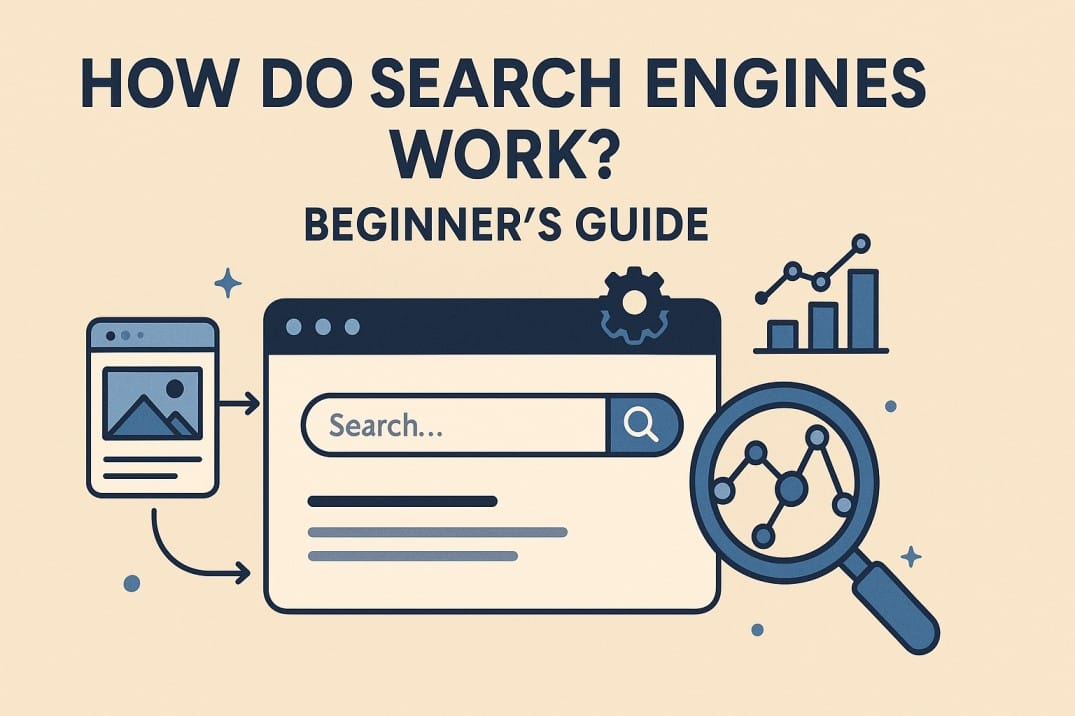

Are you just beginning your journey into the world of Search Engine Optimization (SEO)? You might have heard how SEO can help your website attract more visitors and climb higher on search engine results — but understanding how it all works can sometimes feel like decoding a secret language.
Don’t worry — it’s not as complex as it seems. Think of this as your friendly guide through the maze of SEO, helping you understand how search engines think and how artificial intelligence (AI) is reshaping digital marketing today. Once you grasp these basics, you’ll be ready to use SEO not just to boost website traffic, but to attract the right kind of audience — genuine visitors who turn into lasting customers.
Imagine standing in a grand library — endless shelves stretching beyond sight, filled with millions of books. You’re looking for one particular story, but there’s no librarian, no index, no guide. How would you ever find what you need?
Now, picture a gentle, tireless librarian — one who knows every page in every book. The moment you whisper your query, she leads you straight to the right shelf, the right chapter, the right word.
That librarian is Google.
And that entire process — how your book (your website) gets noticed, picked, and presented — is the soul of SEO, or Search Engine Optimization.
SEO isn’t just a digital marketing strategy; it’s the ancient art of being found.
It’s the silent dialogue between human curiosity and digital intelligence — a bridge that connects people’s questions to your answers.
So, let’s get started to see how SEO works. What you’ll learn in this blog is:
What is Search Engine Optimization (SEO)?
SEO, short for Search Engine Optimization, is the practice of attracting visitors to your website through free, organic, and natural search results. In simple terms, it’s about making your website more visible when people search for topics, products, or services related to your business. The higher your site appears on the Search Engine Results Pages (SERPs), the greater the chance people will find and visit it.
Think of SEO as your website’s voice in a crowded digital marketplace—the clearer and more relevant it is, the easier it becomes for search engines to notice you and connect you with the right audience.
Interestingly, Rand Fishkin, co-founder of Moz, once compared SEO to Maslow’s Hierarchy of Needs — the pyramid that outlines what humans need to thrive. He created a version called “Mozlow’s Hierarchy of SEO Needs”, showing how websites, too, have foundational needs that must be met before aiming for higher goals. From technical setup and accessibility to engaging content and brand authority — each level supports the next, building a strong, well-optimized presence online.

What are the three pillars of SEO?
As a digital marketer, one of your most valuable skills is understanding how to make your brand or website discoverable. When people search online, your goal is to be found — and that’s where SEO becomes your most trusted ally. The digital landscape is always changing, but while the algorithms evolve, the heart of SEO remains the same.
At its core, SEO stands on three foundational pillars — each supporting the others to help your website grow, perform, and shine in search results.
1. On-Page Optimization – Crafting the Experience
This pillar is all about what your visitors see and feel when they land on your site. On-page SEO ensures that your content is relevant, engaging, and aligned with what your audience is searching for. It’s where creativity meets strategy—choosing the right keywords, writing naturally, and organizing content so that it feels effortless to read.
From the title tags to the meta descriptions, from the images you use to the way your paragraphs flow—everything contributes to how well your page communicates its value. And with tools like WordPress, Wix, Shopify, or Magento, managing on-page elements has never been easier.
2. Off-Page Optimization – Building Trust Beyond Your Site
While the first two pillars focus on what happens within your website, off-page SEO is about what happens outside of it. It’s the art of earning trust and reputation across the internet.
When credible websites link back to yours, it signals to Google that your content is valuable and reliable. These backlinks act like votes of confidence, strengthening your authority and improving your rankings over time.
Think of it as digital word-of-mouth—the more people talk about you (and link to you), the more your reputation grows.
Together, these three pillars form the heart of modern SEO. Nurture them consistently, and your brand will not only be found — it will be remembered.
3. Technical Optimization – Building the Foundation
Think of this as the backbone of your website—the quiet, behind-the-scenes work that makes everything run smoothly. Technical SEO focuses on improving the structure and performance of your site so search engines can easily crawl, index, and understand your pages.
It’s not about content — it’s about access.
A simple example? Submit your sitemap to Google, fix broken links, and ensure your site loads quickly on all devices. When your foundation is solid, your content can stand tall.
How do search engines actually work?
Whenever someone has a question — whether it’s “best coffee shops near me” or “how to fix a leaky tap” — their journey often begins with a search engine. These digital guides use complex algorithms, or smart computer programs, to sift through billions of web pages and bring back the most relevant answers in seconds.
Behind every search result you see lies an intricate process — one where algorithms act like detectives, scanning web pages for clues that match a user’s intent. That’s why Google’s algorithm updates can feel like earthquakes in the marketing world — a small change in how these programs interpret data can shift website rankings overnight.
And it’s not just search engines; social media platforms like Facebook, Instagram, and YouTube also rely on algorithms to decide what content appears in people’s feeds. Understanding how these systems think helps marketers adapt and stay visible where it matters most.
In essence, search engines follow three key steps to do their job:
-
Crawling – discovering new and updated web pages.
-
Indexing – storing and organizing those pages in a vast digital library.
-
Ranking – deciding which pages deserve to appear first for each search.
Each step works together like gears in a clock — precise, continuous, and quietly shaping what the world sees when it goes searching.
Step 1: Search Engine Crawling – The Discovery Phase
Every great journey begins with discovery — and in the world of search engines, that journey starts with crawling.
Search engines like Google send out tiny digital explorers known as web crawlers or spiders (you might’ve heard the term Googlebot before). These crawlers roam the vast web, moving from one link to another, constantly on the lookout for new or updated pages to learn about.
Think of them as curious librarians wandering through an ever-expanding library — scanning new books, noting changes in old ones, and updating their catalog so readers (or in this case, searchers) can always find what’s current and relevant.
When a crawler visits your website, it doesn’t just stop at the homepage. It follows the links within your site — from one page to the next — uncovering your blog posts, product pages, or landing pages along the way.
For instance, if your latest blog post is linked from your homepage, Google’s crawler will naturally follow that path and discover the new page.
In essence, links are the web’s pathways, guiding search engines through your content and helping them understand how every piece connects. Without these paths, your pages might remain hidden — unvisited, unindexed, and unseen.
Step 2: Search Engine Indexing – The Organizing Phase
Once a search engine finishes crawling your website, it moves on to the next crucial step — indexing.
Think of indexing as the process of deciding which pages deserve a place in Google’s vast library of information. When a crawler visits your page, it collects the details — your content, keywords, links, images, and structure — and then decides whether the page is valuable enough to be stored in its index.
If Google finds your page useful, unique, and relevant, it adds it to this massive digital archive, ready to be pulled up whenever someone searches for a related topic. But if the page doesn’t meet certain standards, it might be left out.
A web page may not be indexed if:
-
The content is duplicate (copied or too similar to existing pages).
-
The page appears low-quality, spammy, or adds little value.
-
The crawler couldn’t properly access the page.
-
The site or page has no internal or external links pointing to it.
In simpler words, if your content doesn’t offer something unique or trustworthy, it might never make it to Google’s shelves.
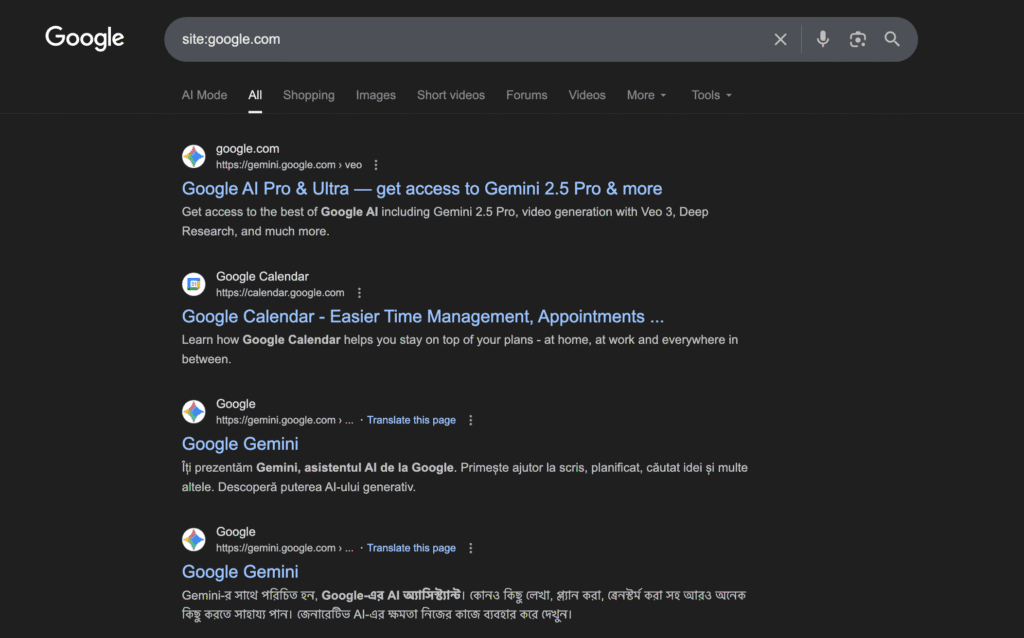
✨ Pro Tip: You can easily check which of your pages are indexed by typing site:yourdomain.com into Google’s search bar. This quick search shows the pages currently visible in Google’s index. For a deeper, more technical look, explore the Index Coverage Report in Google Search Console — it tells you which pages are indexed, which aren’t, and why.
Step 3: Search Engine Ranking – Where Visibility Is Earned
At last, we arrive at the most crucial stage — ranking.
After your website has been crawled and indexed, search engines decide where your pages should appear in the search results. This is the moment when all your SEO efforts come together to determine your visibility — whether you shine on page one or get buried beyond sight.
Search engines rely on hundreds of factors — over 200 ranking signals, to be precise — to decide how to order results for any given search. Each signal helps Google evaluate which pages are most trustworthy, useful, and relevant for the user’s intent.
These signals can be grouped into the three pillars of SEO — technical, on-page, and off-page optimization — and together, they form the blueprint of how a website earns its place in the digital spotlight.
Here are some key examples of the signals that shape your rankings:
-
Keyword in the title tag: Search engines check if the main keyword (or a close synonym) appears naturally in your page title — a strong indicator of relevance.
-
Page loading speed: Fast-loading, mobile-friendly websites not only please users but also earn better rankings. Slow pages often get left behind.
-
Website reputation: The credibility of your domain matters. A trusted, authoritative site stands a far better chance of ranking higher than a new or low-quality one.
-
Backlinks: Each backlink from a reputable source acts like a vote of confidence, signaling to Google that others vouch for your content.
-
Content quality and relevance: The heart of SEO — is your content genuinely helpful, accurate, and aligned with what your audience is searching for?
-
Mobile-friendliness: In today’s mobile-first world, search engines prioritize websites that deliver a smooth experience on smartphones and tablets.
In short, ranking isn’t just about keywords or links — it’s about trust, relevance, and user experience working in harmony. The better your site serves real people, the more likely search engines are to reward it with visibility.
Paid Search vs. Organic Search — Understanding the Differences and the Harmony Between Them
In the vast kingdom of search engines, two paths lead to visibility — Paid Search and Organic Search. While both can bring visitors to your digital doorstep, they do so in very different ways. To master SEO, it’s vital to understand how these two forces differ — and how they can work together like rhythm and melody in a timeless song.
Key Differences Between Paid and Organic Search
1. Position on the SERP
Paid search results claim the topmost spots on the Search Engine Results Page (SERP), often marked with a small “Sponsored” or “Ad” label. Organic results, on the other hand, appear beneath these — earned, not bought, through the art and science of SEO.
Example: When you search for “best water bottle,” you’ll likely see shiny product ads up top — those are paid. Scroll a bit further, and you’ll find the organic listings — crafted through keyword strategy, content quality, and backlinks.
💡 Note: With Google’s AI Overviews evolving, the way both ads and organic results appear is continuously changing — so staying updated with these developments is crucial.
2. Time to Results
Paid search is like lighting a match — instant illumination but short-lived. The moment you turn on your campaign, you can see traffic flow in.
Organic search, however, is more like tending a garden — it takes patience, nurturing, and consistent effort. The results may take weeks or months, but they grow steadily and sustainably over time.
3. Cost and Investment
With paid search (PPC), you pay each time someone clicks on your ad — that’s why it’s called cost-per-click (CPC) advertising. Essentially, you’re renting your visibility.
In organic search, you earn that visibility. It’s free in clicks but not in effort. It demands investment in content creation, technical SEO, and link-building — the kind of investment that builds lasting authority.
4. Return on Investment (ROI)
Paid search ROI is often easier to measure because of the direct data provided by platforms like Google Ads and GA4. But here’s the trade-off — ROI can plateau or even decline once you stop spending.
Organic search, though slower to start, tends to compound over time. Each piece of content you optimize becomes a long-term asset — improving your ROI with every passing month.
5. Share of Traffic
According to BrightEdge research, organic search drives about 53% of all website traffic, while paid search contributes around 15%.
That means the majority of users still trust and click on organic results — proof that authenticity and authority hold more power than ad spend alone.
Similarities Between Paid and Organic Search
Though their approaches differ, both paid and organic search share a common purpose — to connect your message with the right audience at the right time.
Here’s how they align:
1. Keyword Research
Both strategies begin with understanding what your audience is searching for. The same keyword data can guide your paid campaigns and your SEO optimization — making them perfect companions rather than competitors.
2. Landing Pages
Whether you’re running a PPC campaign or ranking organically, your success depends on your landing page — how relevant, fast, and persuasive it is. A single great page can serve both paid and organic efforts if designed with clarity and intent.
3. User Intent & Traffic Generation
In both cases, users come with a purpose — to learn, compare, or buy. They’re active seekers, not passive scrollers. When your content or ad satisfies their intent, conversions naturally follow.
In Essence
Paid search gives you speed.
Organic search gives you strength.
Together, they create balance — one builds immediate momentum, the other builds enduring trust.
In a well-rounded digital strategy, SEO and PPC are not rivals but allies, complementing each other to drive both short-term gains and long-term growth.
How to Get the Most Out of RankBrain
In the grand orchestra of Google’s ranking factors, RankBrain is the conductor that listens not to keywords alone — but to human intent. It’s Google’s machine learning system designed to understand how people interact with search results and to reward the content that truly satisfies their needs.
So, to master modern SEO, you must learn to speak the language of RankBrain — a blend of empathy, intelligence, and experience.
1. Target Long-Tail and Medium-Tail Keywords
RankBrain thrives on context and intent, not just single keywords.
That’s why long-tail and medium-tail phrases — like “best skincare routine for dry skin” or “affordable family vacation ideas” — perform better.
They mimic how real people speak, allowing your content to match search intent more precisely.
Instead of chasing high-volume generic terms, aim for the phrases that answer real questions from your ideal audience.
Tip: Use keyword tools and even Google’s “People also ask” section to discover natural question-based keywords your readers are already using.
2. Write Naturally — Speak Like a Human
RankBrain understands natural language. It looks for content that flows the way humans think, talk, and inquire.
Forget robotic stuffing of keywords — instead, write conversationally. Let your tone mirror how your audience might phrase their own thoughts.
When your writing feels authentic and relatable, RankBrain recognizes it as human-centered content — and users stay longer, which sends strong positive signals back to Google.
3. Optimize Titles and Meta Descriptions for Clicks
Your title tag and meta description are your first impression in search results — your digital handshake with the audience.
RankBrain measures how many users click your result compared to others (that’s your Click-Through Rate, or CTR).
To optimize:
-
Write clear, emotionally appealing titles.
-
Include your main keyword naturally.
-
Promise value — make readers feel they’ll gain something by clicking.
-
Keep your meta description under 160 characters and ensure it matches your content.
Example:
Instead of “SEO Tips for Beginners,” try
“10 Proven SEO Tips to Rank Higher — Even If You’re Just Starting Out!”
4. Increase Dwell Time, Reduce Bounce Rate
RankBrain pays attention to how long users stay on your page — their dwell time — and whether they quickly leave (your bounce rate).
If visitors click your result but bounce back to Google within seconds, RankBrain assumes your page didn’t deliver what they expected.
To keep users engaged:
-
Begin your content with a strong, clear opening.
-
Use subheadings to make it easy to skim.
-
Answer key questions early.
-
Deliver value quickly — don’t bury the solution under fluff.
When people stay longer, read deeper, and explore your other pages, RankBrain interprets it as quality and satisfaction.
What Is an SEO Strategy?
In the world of digital marketing, hope is not a plan — and guessing rarely wins the game.
Just as a captain sails with a compass and map, your online presence needs direction — and that direction is your SEO strategy.
An SEO strategy is more than just choosing keywords or writing blogs. It’s the structured art of optimizing every piece of content so it rises like a star in the vast sky of search engines. The goal? To appear at the very top of Google’s results — not for vanity, but for visibility. Because the higher you rank, the easier it becomes for your audience to find you, trust you, and connect with you.
Why You Need an SEO Strategy
Without a strategy, SEO can feel like trying to plant a garden without knowing the seasons.
You might water, nurture, and hope — but if the soil isn’t right or the timing is off, the flowers never bloom.
An SEO strategy ensures that every word you write, every image you post, every link you build has a purpose. It helps you:
-
Create content that ranks, not just content that exists.
-
Focus your time and budget on what actually drives results.
-
Understand your audience’s search intent — what they truly want when they type into Google.
-
Build consistency — because in SEO, success isn’t an event, it’s a rhythm.
🎯 Think of your SEO strategy as a bridge — connecting what your audience is searching for with the solutions you offer.
The Core Purpose of an SEO Strategy
At its heart, an SEO strategy is designed to do three things:
-
Boost visibility — so your website shines on page one, not buried beneath your competitors.
-
Increase organic traffic — the kind of visitors who come naturally, without ads.
-
Attract your ideal customers — the ones already looking for what you provide.
By analyzing performance data and aligning content with searcher intent, your strategy ensures that every post, product page, and landing page is a step toward growth.
What Metrics Should You Measure for SEO?
In the ever-changing world of SEO, success isn’t just about ranking higher — it’s about measuring what matters. Setting clear objectives and tracking them over time is what turns effort into growth, and guesswork into strategy.
Metrics are like your compass — they tell you where you’re heading, how far you’ve come, and when it’s time to change direction. So, let’s explore the key SEO metrics that help you understand how well your digital journey is unfolding.
1. Keywords — The Foundation of Visibility
Keywords are the bridge between what people search for and the content you create.
By tracking which keywords your site ranks for — and how those rankings shift — you gain insight into how visible your brand truly is.
Strong keyword performance tells you that search engines understand your content’s purpose and that your audience is finding it relevant.
📊 This is a Top-of-the-Funnel (TOFU) metric, helping you gauge early awareness.
2. Organic Traffic — The Pulse of Your Website
Organic traffic represents all those visitors who find you naturally through search engines — without paid ads.
When your organic traffic grows, it’s a sign that your SEO strategies are working in harmony with search intent.
This metric tells you how healthy your website is in the eyes of Google and your audience.
🌱 Organic traffic is a TOFU metric — a key indicator of brand reach and awareness.
3. SERP Rankings — Your Position in the Spotlight
The Search Engine Results Page (SERP) is your stage, and ranking high means you’re standing in the spotlight.
Monitoring your SERP position for target keywords helps you understand how visible your content is to potential visitors.
If your page consistently climbs up, you’re moving closer to your audience — and closer to conversions.
🧭 This is also a TOFU metric.
4. Time Spent on Page — A Sign of Value
When visitors linger on your page, it’s a silent compliment.
A higher “time on page” means readers are engaged — they’re reading, scrolling, and connecting with your message.
If users leave too quickly, it may suggest your content didn’t match their intent or lacked depth.
💬 This is a Middle-of-the-Funnel (MOFU) metric that reveals how meaningful your content feels to your audience.
5. Engagement Rate — The Measure of Connection
Engagement is proof that your content resonates.
It includes actions like shares, comments, likes, and how deeply users interact with your pages.
A strong engagement rate reflects trust, interest, and emotional connection — the kind of impact every brand strives for.
💡 This is a MOFU metric.
6. Click-Through Rate (CTR) — The First Impression Metric
CTR measures how many people click on your page after seeing it in search results.
It tells you how appealing your titles and meta descriptions are — the first touchpoints in your SEO journey.
A rising CTR means you’re not just visible — you’re intriguing.
🎯 CTR is a TOFU metric.
7. Brand Awareness — Building Recognition and Recall
Brand awareness is more emotional than technical — it’s about how easily people recognize and remember your name.
When your brand keeps appearing in search results, people begin to trust it, even before clicking.
This recognition fuels loyalty and sets you apart from competitors.
🌟 This is a TOFU metric.
8. Leads and Revenue — The True Business Impact
Ultimately, SEO isn’t just about traffic — it’s about transformation.
By tracking how many leads and sales come from organic visitors, you’ll see exactly how your SEO contributes to real business growth.
When you can connect revenue back to keywords or pages, you’ve unlocked the true ROI of SEO.
💰 This is a Bottom-of-the-Funnel (BOFU) metric.
9. Domain Authority — The Power of Trust
Your Domain Authority (DA) predicts how likely your website is to rank in search results compared to others.
It’s influenced by backlinks, content quality, and overall site credibility.
A higher DA means search engines view your site as authoritative and reliable — a sign that your SEO foundation is strong.
🌐 This is a TOFU metric.
How to Become an SEO Specialist
Now that you understand what SEO is and how it works, you might be wondering — could this be my career path?
If that thought sparks even a hint of curiosity, you’re in luck.
Because in today’s digital age, SEO isn’t just a marketing skill — it’s a superpower.
Every business, from local boutiques to global corporations, is searching for professionals who can help them rise above the noise, appear on Google’s front page, and connect with customers in meaningful ways. That’s where an SEO Specialist steps in — the quiet architect behind every brand’s online success story.
The Demand for SEO Professionals
According to Conductor’s “State of SEO in 2025” report, a remarkable 91% of marketers agreed that SEO positively impacts website performance and marketing goals.
Across industries, increasing brand visibility through SEO ranked among the highest priorities for modern marketers.
In simpler words — SEO is no longer optional. It’s essential.
This growing demand means that skilled SEO professionals are not only valued — they’re well-compensated. Whether you work in-house, as a freelancer, or within an agency, your expertise can translate into a stable and rewarding career.
What Does an SEO Specialist Actually Do?
An SEO Specialist wears many hats — strategist, analyst, storyteller, and sometimes even designer.
Their mission is to help websites rank higher on search engines while delivering a better experience for users.
Daily tasks might include:
-
Researching and analyzing the best keywords for a business or brand.
-
Optimizing website content, titles, and metadata for search engines.
-
Building backlinks and partnerships to strengthen domain authority.
-
Monitoring website analytics to understand what’s working — and what’s not.
-
Keeping up with Google’s latest algorithm updates (because SEO never stands still).
But at its heart, SEO is about understanding people — their habits, their questions, and their intent — and helping them find the answers they seek.
Skills You’ll Need to Grow Into an SEO Specialist
To thrive in SEO, you don’t need to be a coding wizard or a marketing guru from day one.
What you need is curiosity, patience, and the will to learn.
Here are some skills to cultivate along the way:
-
Analytical thinking: Learn to read data and draw insights from tools like Google Analytics, Search Console, and SEMrush.
-
Content understanding: Know how to write and optimize content that speaks both to humans and algorithms.
-
Technical basics: Familiarize yourself with site speed, mobile optimization, and structured data — the building blocks of technical SEO.
-
Link-building strategy: Understand how to build authority and trust through quality backlinks.
-
Adaptability: SEO evolves constantly. The best specialists never stop learning.
🌱 Remember: SEO is a journey, not a sprint. It rewards those who listen, learn, and evolve.
Why a Career in SEO Is Worth It
The beauty of SEO lies in its blend of art and science. You’re not just tweaking code or analyzing data — you’re shaping stories that help brands reach people in moments that matter most.
It’s a career that combines creativity with logic, patience with progress, and impact with insight.
And here’s the best part — SEO isn’t going anywhere.
As long as people continue to search online (and they always will), there will be a need for skilled professionals who can connect businesses with audiences through organic discovery.
What Can You Earn as an SEO Specialist?
The beauty of an SEO career lies not just in the creative and analytical balance it offers — but also in the financial rewards that come with expertise. Your income as an SEO professional will vary based on where you work, your level of experience, and how deep your hands are in the craft — whether you’re freelancing, working in an agency, or leading SEO efforts in-house for a brand.
In short — the better you get at ranking content and driving organic growth, the more valuable you become.
Let’s take a look at what SEO salaries look like around the world:
🇺🇸 United States
According to Search Engine Land, SEO professionals in the U.S. can expect competitive salaries across every level:
-
Entry-level SEO Specialist: $49,000 – $72,000 per year
-
SEO Analyst / SEO Executive: $62,000 – $101,000 per year
-
SEO Strategist: $69,000 – $110,000 per year
-
SEO Manager: $80,000 – $120,000 per year
-
Head of SEO / SEO Director: $109,000 – $192,000 per year
As you can see, there’s strong earning potential as your skills mature and your understanding of data-driven optimization deepens.
🇬🇧 United Kingdom
In the UK, the trend follows a similar pattern. Based on data from Indeed, here’s an average salary breakdown:
-
Junior SEO Specialist: £23,642 per year
-
SEO Executive: £25,555 per year
-
SEO Content Strategist: £35,811 per year
-
SEO Manager: £37,531 per year
-
Senior SEO Specialist: £42,678 per year
While salaries are slightly lower than in the U.S., they’re still quite solid — especially considering the demand for skilled SEO professionals in London and other digital hubs.
🇮🇪 Ireland
Ireland’s digital market is smaller but growing rapidly, with a healthy demand for SEO talent. Based on Indeed.com, here’s what professionals are earning:
-
SEO Executive: €31,031 per year
-
SEO Specialist: €47,864 per year
-
Senior SEO Specialist: €61,169 per year
-
SEO Manager: €54,077 per year
Whether you’re working remotely or onsite, Ireland’s market offers good opportunities for SEO experts with both technical and creative skill sets.
🇮🇳 India
India’s digital economy is booming, and SEO is one of the most in-demand skills in marketing today. From startups to multinational corporations, every business is vying for visibility — which means skilled SEO specialists are in high demand.
Here’s an approximate salary range based on data from Glassdoor and Payscale:
-
Fresher / Junior SEO Executive: ₹2.5 – ₹4.5 LPA
-
SEO Specialist / Analyst: ₹4.5 – ₹7 LPA
-
Senior SEO Executive / Strategist: ₹6 – ₹10 LPA
-
SEO Manager: ₹8 – ₹15 LPA
-
Head of SEO / SEO Director: ₹15 – ₹30+ LPA
Freelancers and consultants can also earn handsomely, especially those managing multiple international clients. In fact, experienced SEO professionals working with U.S. or European clients can make between ₹10–₹20 lakhs annually or more, depending on project size and performance.
What Are the Best SEO Tools?
Every craftsman needs the right set of tools — and in the world of SEO, they’re nothing short of magic. From tracking your rankings to uncovering hidden keyword gems, these tools help you refine, measure, and elevate your strategy. Some are completely free, while others come with premium plans that unlock deeper insights. The key is to find the combination that suits your workflow and goals best.
Ranking & Reporting SEO Tools
These are your window into performance — the data-driven heartbeat of your SEO world.
-
Google Search Console – Your ultimate ally from Google itself. It helps you monitor indexing, fix issues, and track how your site performs on search results.
-
GA4 (Google Analytics 4) – Perfect for understanding audience behavior, traffic sources, and conversions. A must for performance tracking.
-
KWFinder – A simple yet powerful keyword research tool that helps you discover low-competition keywords with strong search intent.
-
Semrush – A complete SEO powerhouse. From competitor analysis to keyword tracking and backlink audits, it’s a one-stop SEO suite.
-
PageSpeed Insights – Page load speed can make or break your rankings. This tool tells you how fast your site loads and gives suggestions to improve it.
SEO Audit Tools
Think of these as your site’s health check-ups — helping you identify weak spots and fine-tune performance.
-
Screaming Frog – A classic favorite. This crawler scans your entire site for broken links, missing metadata, duplicate content, and more.
-
SEOptimer – A user-friendly audit tool that grades your website’s SEO and provides actionable recommendations.
-
Moz – A pioneer in SEO, offering tools for audits, keyword tracking, and link analysis with an intuitive dashboard.
Keyword & Content Research Tools
This is where strategy meets creativity — tools that help you understand what your audience truly wants.
-
Google Keyword Planner – Ideal for discovering keywords directly from Google’s own data.
-
AnswerThePublic – Visualizes the questions real users ask around a keyword — great for crafting content ideas.
-
Ubersuggest – Offers keyword suggestions, traffic data, and competitor analysis — perfect for quick insights.
-
BuzzSumo – A favorite for content marketers. It shows which topics and formats perform best across the web and social platforms.
AI-Powered SEO Tools
Welcome to the future — where artificial intelligence meets SEO mastery.
-
seoClarity – Uses AI to automate insights, predict ranking changes, and optimize at scale.
-
Surfer SEO – Bridges content and optimization beautifully. It analyzes top-ranking pages to help you craft perfectly balanced, data-driven content.
AI and SEO: The New Trend Coming in 2025 and Beyond
The winds of digital change never stop blowing, and as we move into 2026 and beyond, Artificial Intelligence (AI) stands tall at the very heart of SEO’s evolution. What once was about keywords and backlinks is now transforming into something more intelligent — more human, even. The age of AI-powered SEO is here, reshaping the very fabric of how we search, optimize, and connect online.
The Rise of AI in Search
Search engines like Google, Bing, and others are no longer just matching words — they’re understanding meaning. AI-driven algorithms now read between the lines, interpret intent, and deliver answers that feel tailor-made for each user.
In 2026, we’re stepping into a world where:
-
AI Overviews dominate the top of search results, summarizing content from multiple sources.
-
Voice Search and Conversational AI grow stronger, meaning queries sound more like natural conversation than typed phrases.
-
Search personalization becomes the new norm — your results will reflect not just what you searched for, but who you are and what you care about.
SEO professionals must now optimize for context and emotion, not just keywords.
AI Tools: From Assistants to Strategists
AI is no longer just a helper in SEO — it’s becoming a strategist. Tools like ChatGPT, Gemini, Jasper, Surfer SEO, and seoClarity are learning to:
-
Suggest content structures based on user intent.
-
Predict which topics will trend before they do.
-
Automate keyword clustering and content briefs.
-
Generate SEO-friendly meta titles, descriptions, and schema markup.
But make no mistake — human creativity remains the secret ingredient. AI can write, but only humans can make readers feel.
The Evolution of Search Ranking
As AI becomes the gatekeeper of search, ranking signals are evolving too. Here’s what the next generation of SEO ranking factors might look like:
-
EEAT (Experience, Expertise, Authoritativeness, and Trustworthiness) will hold more weight than ever. Google’s AI will learn to judge real-world credibility.
-
User Engagement Metrics — dwell time, click-through rates, and interaction — will be seen as reflections of true content value.
-
Entity-Based SEO — search engines will focus more on understanding “who” and “what” rather than “which keyword.”
-
Real-Time Adaptation — AI-powered ranking systems will change more dynamically, learning from user behavior in real time.
In short, SEO will be less about chasing algorithms — and more about building authentic digital experiences.
Preparing for the Future: SEO in an AI World
As 2026 unfolds, success in SEO will belong to those who adapt early and stay genuine. Here’s how to future-proof your strategy:
-
Write for people, not machines — AI understands emotion now; make sure your content carries it.
-
Leverage AI ethically — use it to analyze, predict, and assist — but never to deceive.
-
Focus on semantic search — optimize for meaning, not just exact phrases.
-
Combine human storytelling with AI precision — the blend will define the SEO masters of tomorrow.
Final Thought: The Ever-Evolving Art of SEO
SEO isn’t just about algorithms or rankings — it’s about connection. It’s the bridge between a searcher’s curiosity and the truth they seek. Behind every keyword lies a story, a need, a heartbeat — and it’s our job as digital creators to meet that moment with relevance, honesty, and value.
Search Engine Optimization has evolved from simple keyword tactics to a rich symphony of technical precision, human creativity, and AI-driven insight. But at its core, it remains beautifully human — a reflection of how we think, speak, and search for meaning in the digital world.
As we step into the future, remember this timeless truth:
“SEO is not a sprint; it’s a lifelong journey of learning, adapting, and building trust”.
If you nurture it with patience and purpose, your digital presence won’t just be seen — it will be remembered.
Frequently Asked Questions (FAQs)
1. What does SEO stand for?
SEO stands for Search Engine Optimization — the practice of improving your website’s visibility in search engines like Google. It helps your content appear higher in search results, bringing in more organic (free) traffic.
2. Why is SEO important for a website?
SEO is vital because most online experiences start with a search engine. When your website ranks higher, more people discover your business, which leads to more clicks, trust, and conversions — without paying for ads.
3. How long does it take to see SEO results?
SEO isn’t instant — it’s a process that takes time and consistency. Depending on your competition, content quality, and site structure, you can expect noticeable improvements within 3 to 6 months. Long-term efforts yield stronger, lasting results.
4. What are the three main types of SEO?
SEO is built on three key pillars:
-
Technical SEO: Optimizing site speed, mobile-friendliness, and crawlability.
-
On-Page SEO: Creating keyword-rich, valuable, and user-friendly content.
-
Off-Page SEO: Building your site’s reputation through backlinks and brand mentions.
5. What is the difference between SEO and SEM?
SEO (Search Engine Optimization) focuses on earning free, organic traffic through content and technical improvements.
SEM (Search Engine Marketing) includes paid advertising — like Google Ads — where you pay to appear in search results instantly.
6. What are keywords in SEO?
Keywords are the words and phrases people type into search engines. Choosing the right keywords helps your website appear for relevant searches and reach your target audience effectively.
7. How does AI affect SEO in 2026 and beyond?
AI is reshaping SEO by understanding context, intent, and user behavior more deeply. Future SEO strategies will focus less on keyword repetition and more on creating authentic, human-centered experiences optimized for AI-driven search engines.
8. What are backlinks, and why do they matter?
Backlinks are links from other websites pointing to your site. They act like “votes of confidence” — the more quality backlinks you have, the more trustworthy and authoritative your website appears to search engines.
9. Is SEO better than paid ads?
Both have their place. Paid ads deliver quick visibility but stop the moment you stop paying. SEO, on the other hand, takes time but provides long-term, sustainable growth — building trust and credibility over time.
10. Can I do SEO myself, or do I need an expert?
Yes, you can start learning and applying basic SEO yourself — using tools like Google Search Console and Yoast SEO. However, as your website grows, an experienced SEO specialist can help refine your strategy, track data, and scale your results.